A life
The Sword Saint
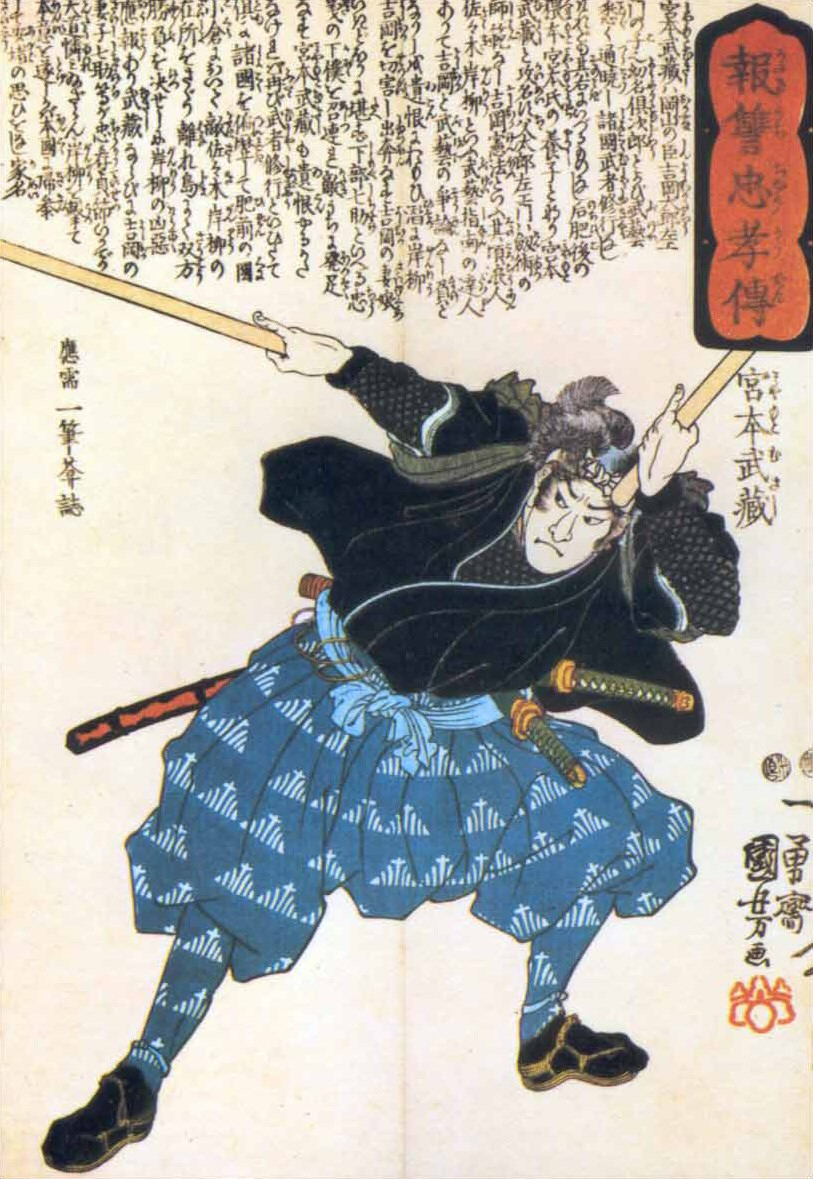
Miyamoto Musashi (1584–1645) is the historical figure The Void is built on. The whole training program follows the structure of one specific book he wrote at the end of his life — the Go Rin no Sho, the Book of Five Rings, completed in 1645 in a cave called Reigando in southern Japan. This page exists so that when you train, you know who you are training with. Not a metaphor. A real person, whose life is documented to the day.
He was born into a Japan that had not yet finished bleeding from a century of civil war. The Sengoku Jidai — the Age of Warring States — had only just been pacified when he came of age, and the warrior class was about to enter its long, slow obsolescence. Within a generation, the matchlock gun and the closed Tokugawa peace would make the sword a ceremonial object. Musashi lived in the narrow window where it was still everything.
He killed his first man at thirteen. By thirty he had won more than sixty duels and never lost. He fought in armour and out of armour, with steel and with bokken, alone and against schools of swordsmen sworn to kill him. He invented a two-sword style — Niten Ichi-ryū, the school of two heavens as one — that no one before him had thought possible to wield. Then, in his fifties, he stopped killing. He went into a cave and wrote a book. That book is the one the Void program walks you through, one month per scroll.
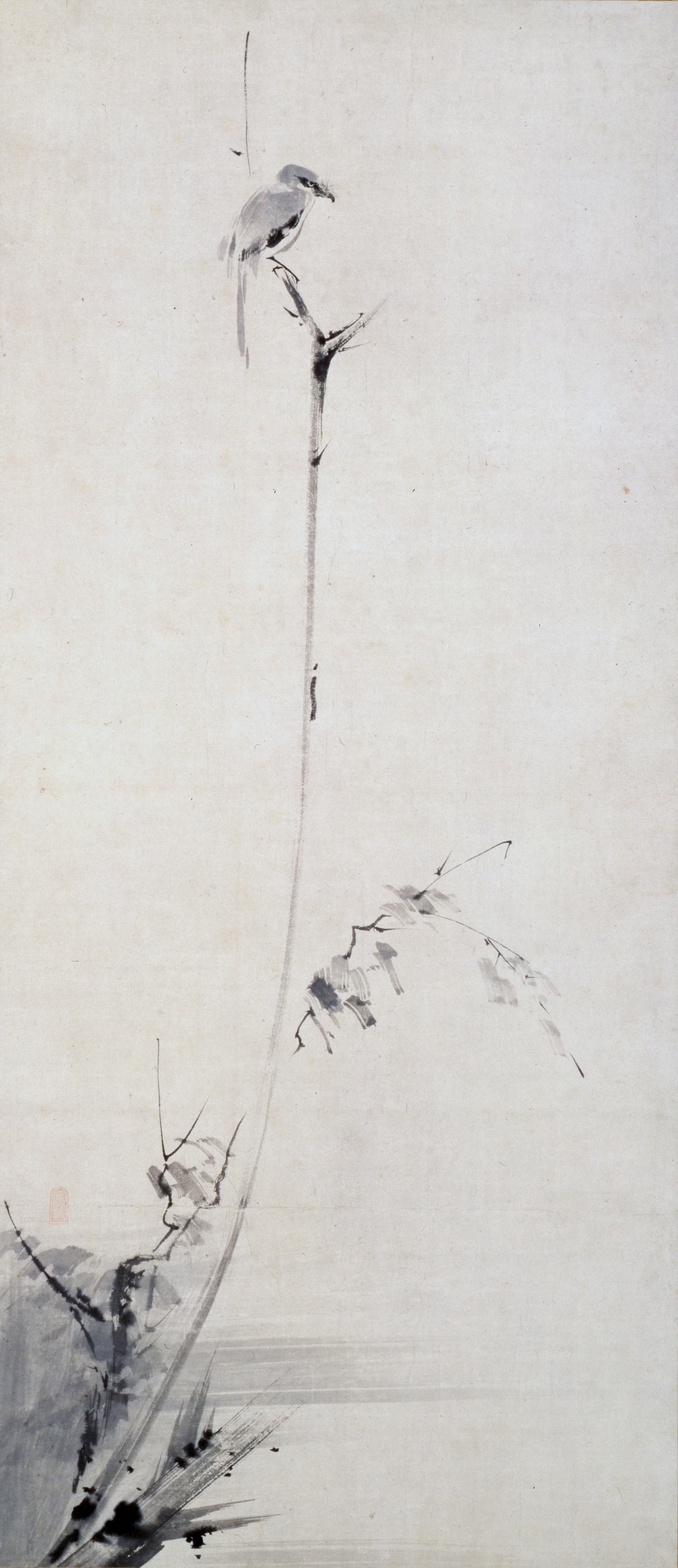
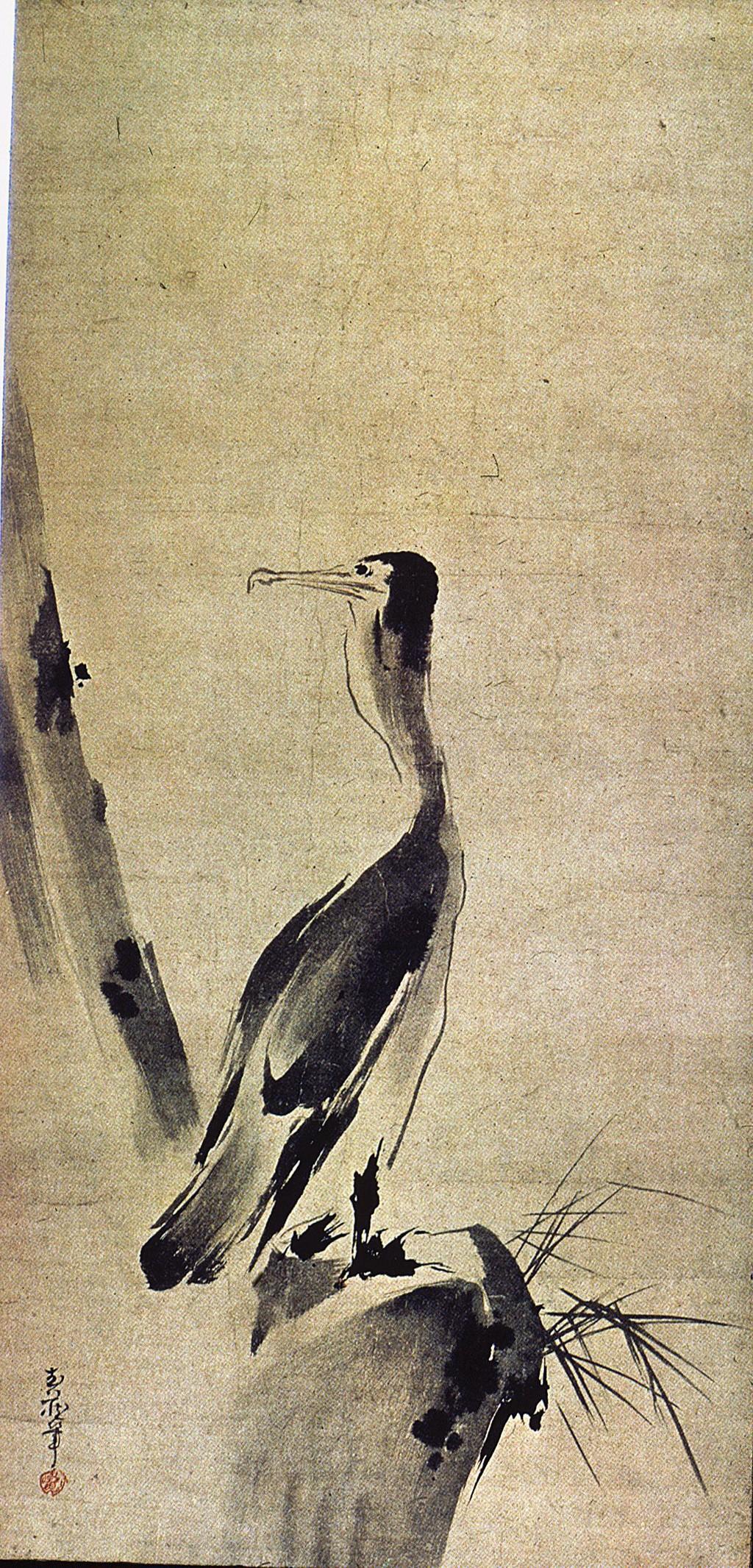
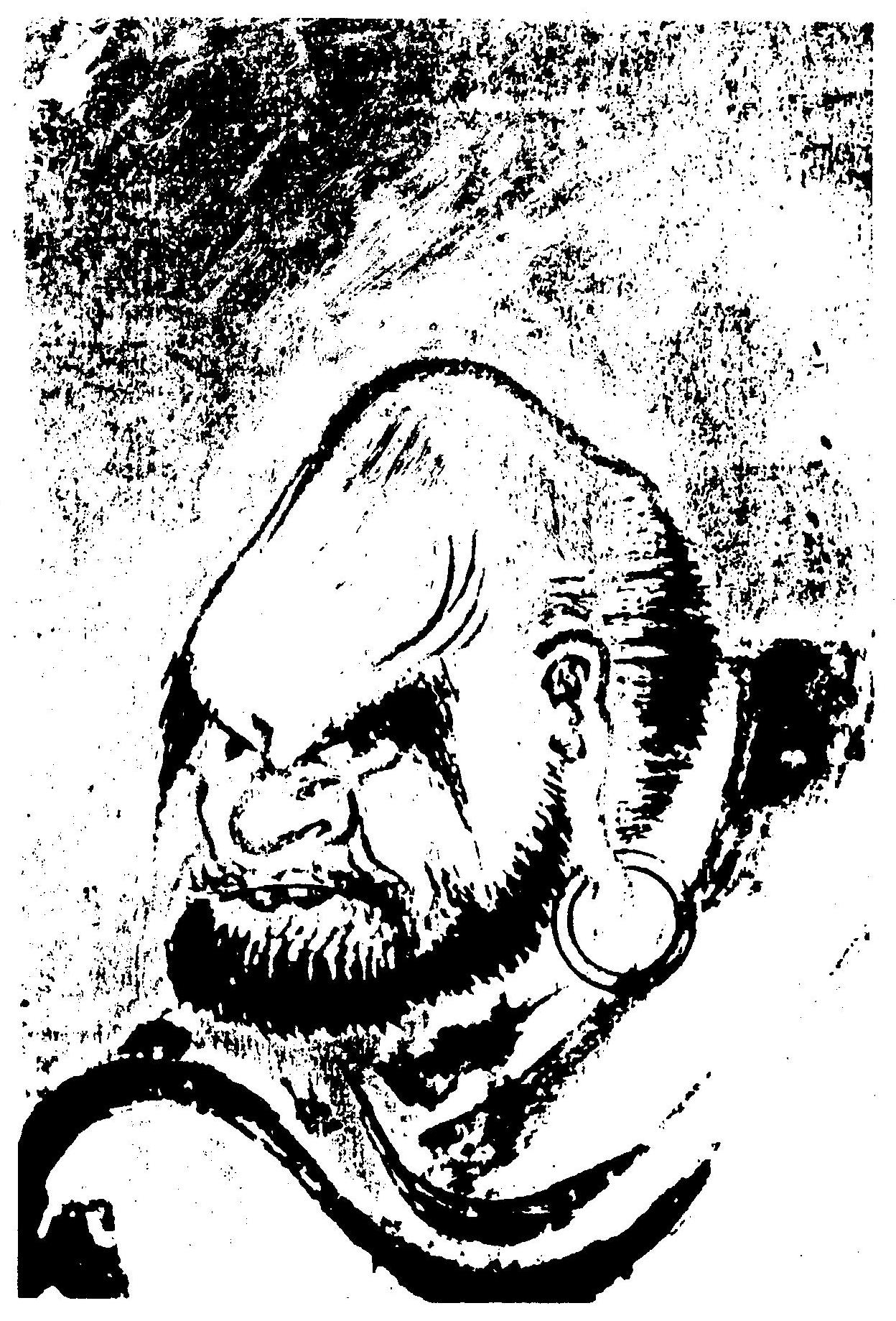
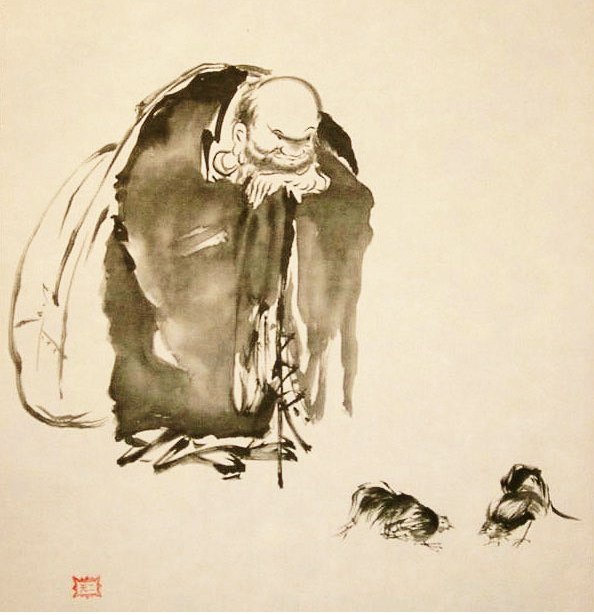
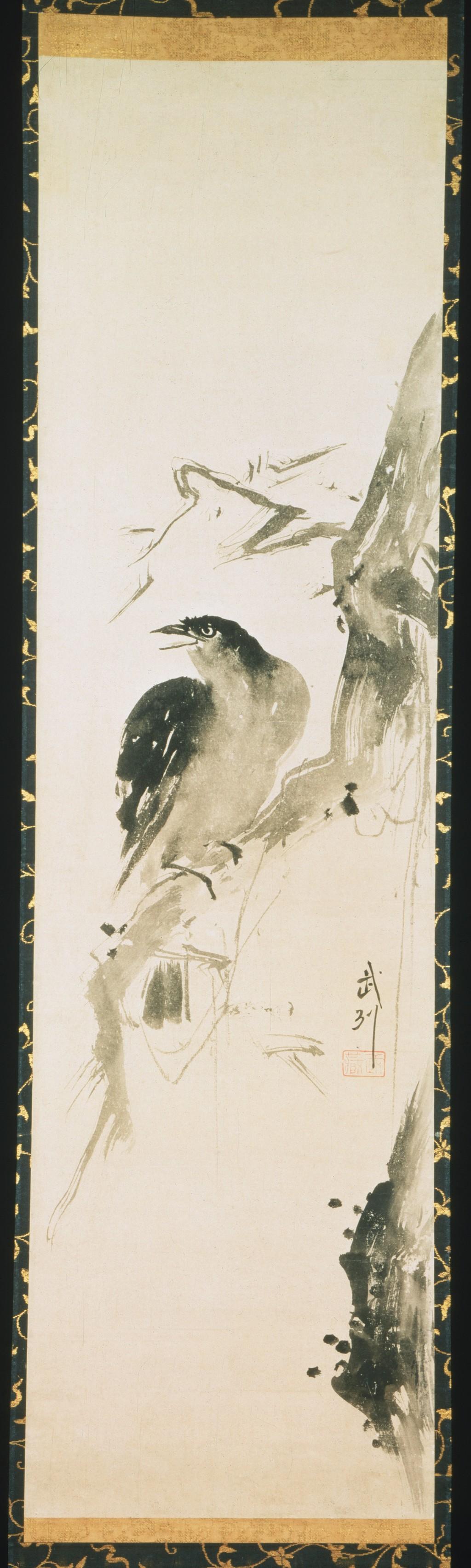
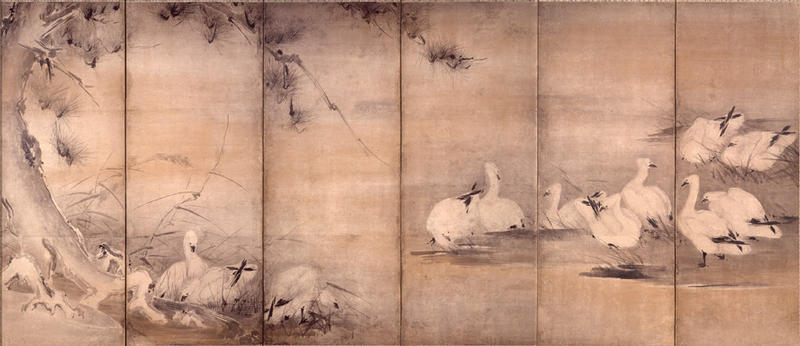
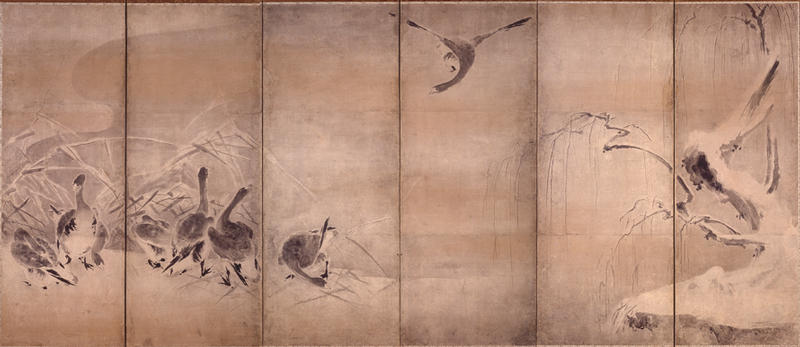
What survived him was not just his strategy. It was his ink. He painted shrikes on dead branches, cormorants on cliff edges, Daruma in a single stroke. He carved wood. He composed renga. He had decided, somewhere in his fifties, that the way of the sword and the way of the brush were the same way — that any pursuit, taken to its limit, became the same training. The proof is on the silk. The paintings in the gallery below are real, scanned from museum holdings in Kyoto and Tokyo. Public domain. Look at them slowly.
His way
Two heavens, one mind
Niten Ichi-ryū — the two-sword style
He fought with the long sword and the short sword in two hands at once. Every other school in Japan held the long sword in two hands and the short sword in reserve. Musashi reasoned that two hands on one sword was a wasted hand. The technique demanded a level of independent control that took most of his life to refine, and few since have matched it. The deeper teaching was the principle: do not waste any part of yourself.
Strategy, not technique
Musashi distrusted schools that taught a thousand techniques. The Book of Five Rings opens by warning against the trap. A real swordsman, he argued, learns very few techniques and learns them so completely that they are no longer techniques. He learns to read the opponent — the rhythm, the timing, the breath — and to act in the moment without choosing. The sword becomes a way of seeing, not a set of forms.
Reigando — the cave above the temple
In 1643, two years before his death, Musashi withdrew into a cave on the cliffs above Iwato Mountain near Kumamoto. There he wrote, in five scrolls, the Go Rin no Sho — Earth, Water, Fire, Wind, Void. The book is short. Each scroll deals with a different layer of strategy: the foundation, the formless, the engagement, the tradition of others, and the truth that lies beyond all of them. It is not a manual. It is a record of what one man finally saw.
Dokkōdō — the way of walking alone
A week before he died, sick and aware of it, Musashi wrote a single sheet of paper for one of his last disciples. Twenty-one lines. They are not soft. They forbid pleasure-seeking, attachment to home, lust, regret, jealousy, possession, even the pursuit of good food. They counsel detachment, indifference, fearlessness in the face of death. Read once they sound severe. Read carefully they are a description of a man who has stopped being moved by anything outside his own purpose. They are the conditions, not the consolations, of the way.